Biblical Bling

image

Where biblical meets Bulgari, if you will, beauty and beliefs meet marvelously amid the mysterious red walls of Rome’s latest exhibition. The Treasures of San Gennaro, dazzling on display at the Palazzo Sciarra, until the 16th of February 2014.

Diamonds and mother nature are both billions of years old, and it is this mergence of mother nature and dedicated belief, by way of the legend of San Gennaro, Saint and protector of Naples, that is said to have kept the city safe from the hot flowing lava of Mount Vesuvius.

Epidemics and earthquakes were believed to have been tamed by San Gennaro, so the surviving citizens of Napoli built a chapel for the Saint in return for his protection, as a pledge of their trust and belief in him. This solemn promise was put in writing by a lawyer in 1527, and the original document is on display at the Fondazione Roma-Museo exhibition in the entrance.

Monarchs and monetary

Said to be worth more than the Crown Jewels in England, or the Imperial Crown in Russia, several centuries of Kings, Queens, Emperors and Popes bestowed lavish gifts in honor of this Saint, and the highest acclaimed goldsmiths and silversmiths were commissioned to create 21,610 masterpieces, 70 of which were transported by armed guard to the museum in Rome.

Over centuries a select committee of trustees, deputized and appointed to guard the special jewels, have kept them safe in a vault in Naples cathedral under lock and ‘golden’ key at the Royal Chapel of The Treasure of San Gennaro. The collection now normally kept at The Museum of The Treasure of San Gennaro, whose director Paolo Jorio over saw the design and construction, has claimed the collection virtually tells the history of Europe. Emmanuele Emanuele, head of the Rome Foundation organizing the exhibition, has also claimed the collection historically and artistically priceless.

Well, after taking a look, we believe him. Untouched and on show for the first time ever outside of Naples, this once in a lifetime exhibition now showing, is one of the most important collections of religious art in the world.

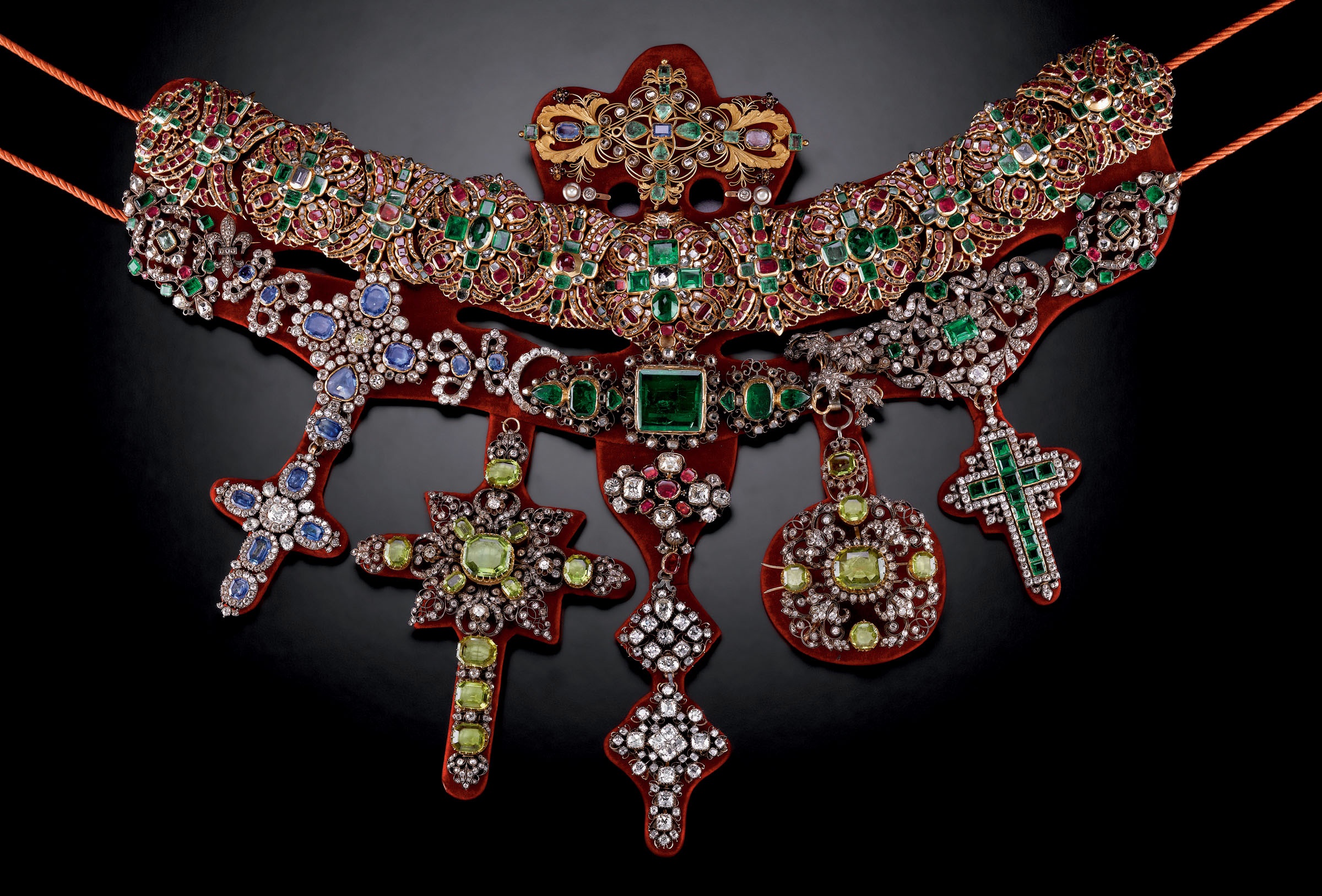
Entering the first room of this exhibit, the spotlight is on a grand golden carriage, while a rainbow array of stunning gems adorn the walls in honor of this third century martyr. Gigantic, awe inspiring candelabras decorated with cherubs, along with a reliquary bust of San Gennaro in gold and silver containing his skull, are showcased alongside the necklace of San Gennaro, begun in 1679 by goldsmith Michele Dato, made to adorn the bust. This absolutely stunning example of workmanship is thought to be one of the most precious pieces of jewellery in the world.

Made with emeralds from Colombia, sapphires and hundreds of diamonds, the design is mind blowing. You think you’ve seen jewels until you’ve seen this, which includes a cross of emeralds and diamonds donated by French Emperor Napoleon Bonaparte. Separate pieces of jewellery have been forged together over centuries to create this necklace, made up of gifts, with many from monarchs. These individual pieces prove a huge mark of respect and show Naples was a force to be reckoned with by the sheer extravagance bestowed. In complete contrast, there is also a pair of earrings donated as a family heirloom, the only belonging of a diseased commoner in 1844, who survived an epidemic.

The Bishops Mitre, used for religious processions of the bust, is again dazzling and ornate, made of gold-plated silver and adorned with over 3000 diamonds, huge square cut emeralds, and hundreds of other rubies and emeralds. We can only imagine how spectacular a procession must be in all its glory. Importantly, the empty vial claimed to contain the coagulated blood of the Saint, which turns to liquid during such ceremonies, is believed to be a miracle that by legend brings good fortune to the city, and thousands of people gather in Naples three times a year to see whether the blood changes.

Lapis Lazuli, malachite, silver and gold. Chalices and tapestries in silk threads. Statues and the sheer geology of what’s in front of you, truly leave you in awe, and you cannot help but notice you are not the only one saying ‘wow’. As a statue of Archangel St Michael stand above a slayed dragon, tongue lolling on the ground.

Who, when, why & wow

In the 16th century, the monarch issued laws and decrees regulating goldsmiths and silversmiths. The guild of goldsmiths, a noble art, was one of the first craftsmanship to be associated with Naples and it was as early as 1305 that the King of Naples, Charles 3rd of Anjou, commissioned the first gift for San Gennaro and started the visible legacy of faith and art combined.

What with all the Neapolitan Baroque artifacts and Gold platters galore, it is not difficult to envisage the fact that in the 16th Century there were as many 300 workshops in Naples. One therefore instantly gains an appreciation of these individual artisans, and the sheer talent available at the time with the designs being literally breathtaking. It is also thanks to this artistry and these creations that this exhibition exists, along with the cult of the Saint, making it even more exceptional.

During the exhibition, the Fondazione Roma-Arte-Musei have organised a series of conferences and educational activities for schools and families in order to engage the public in the ancient art of goldsmiths.

Twinkle, twinkle, little star

Naples has long been famed for its gold smithery, which has ancient roots since the Greek colonial period and the Roman Empire.
These treasures embody a tangible interpretation of the history of Neapolitan and Italian art, with a notion of the light of the art shining from the dark alleyways of Naples.

The ancient Greeks believed that diamonds were the tears of God, whilst the Romans believed they were splinters of fallen stars. Nero held emeralds to his eyes to protect them from sun rays. Whoever said less was more, hasn’t been to Rome or Naples!

Posted in DESIGN, FASHION, ITALY, ITALY MAGAZINE, ROME | 1 Comment

The Director Wears Prada

Image

Wes Anderson and Roman Coppola shoot Prada short film

Fashion and film fans waited with baited breath but were not disappointed with Wes Anderson’s eight minute short film for Prada, which premiered at the Rome Film Festival’s behind the scenes Movie Talks, this week, before being made available to the world at http://www.prada.com.

The Collaboration between the fashion giant and the director comes up smelling of roses. Anderson’s mini, ‘Castello Cavalcanti’, staring Jason Schwatzman as a racing driver, is a fun, bite sized entry into the Italian world, and at that, Anderson’s world.

Wes Anderson, a man who sweats quirkiness and eats eccentric for breakfast, was the bold and best choice for Prada to create a little Italian dream in eight minutes. Award winner and Oscar nominee, Anderson is known for his movies which often focus in some way around a family circle, something synonymous with also being Italian.

Meaning? A beautiful woman, a piazza, bambini, some spaghetti, family, and that sense of community, tradition, and belonging. A celebration of Italy. Actor and star of the 8 minute marvel, Schwatzman, said this movie was “romantic, our own contained beautiful little Italian world”. Schwatzman, playing the role of racing driver Jack Cavalcanti, crashes his beautiful racing car into a statue of Jesus Christ in the main square of a town called Castello Cavalcanti, set in the 50’s, only to realise that he has crashed in the town he comes from, and a piazza full of his relatives including his great, great uncle Michelangelo.

Prada, the Milanese clothing brand, collaborated with Anderson to do the advert, and filming this at Cinecitta was his eighth Roman adventure. Rome was the inspiration for this short film, and in particular, the Federico Fellini 1973 movie Amacord, he explained at the screening. Anderson loves Italy, Italy loves Anderson. He can’t get enough of it. Roman Coppola, who teamed up with Anderson on this and another Prada short about perfume, named ‘Candy’, said: “It is very easy for Italian film makers break away from reality.” Therefore, the fact that a foreign director was chosen to make this is great for Anderson. Anderson says: “perhaps this is the first of a series, if Prada would want it”. Magic!

Andersons new film ‘The Grand Budapest Hotel’ both premiers and opens the Berlin Film Festival in 2014, and stars Ralph Fiennes, Jude Law, Owen Wilson, Tilda Swinton, Adrien Brody and Ed Norton.

© Prada ad by Wes Anderson, Castello Cavalcanti

Posted in DESIGN, FASHION, ITALY, ROME | Leave a comment

image

Every year, as part of the Rome Film Festival, a series of exhibitions demonstrate the great Italian movie moguls and makers of big screen magic.

This year, the Rome Film Festival 2013 celebrates three Italians who have contributed to Italian cinematic history, with a celebratory exhibition in the foyer of the Sala Santa Cecilia at the Auditorium Parco della Musica, funded by Media Friends and The Rome Film Festival.

The magic three are directors Giuseppe Tornatore and Massimo Troisi, and actress Anna Magnani, with a themed sense of emotion threading them seamlessly together for this expo.

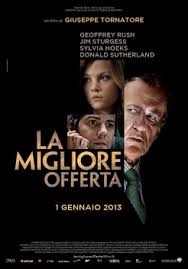
Tornatore, the maestro of the mostra, won an Oscar for The Best Foreign Language Film, for Cinema Paradiso in 1989. For Tornatore’s 2012 thriller ‘The Best Offer’, with Geoffrey Rush and Donald Sutherland, the foyer is turned into an art gallery in tribute to the art theme of the movie, reminiscent from a scene.

The Best Offer is a dark, twisted masterpiece focusing on the condition of agoraphobia, despair, and betrayal.  Rush masters his role as art dealer and collector Virgil Oldman, who is the main character in this psychological thriller, made even more somber thanks to an eerie score by Ennio Morricone.

Black and white movie stills of Virgil Oldman decorate the foyer corridor, whilst reproductions of priceless masterpieces by the likes of Dutch Baroque artist Johannes Vermeer, hang on the wall. Cogs, wheels, and clock faces deliver the final touch, adding further grandeur to this display, with clocks also playing a key role, being relevant to the storyline of the movie.

Further recognition is given in this exhibit to Massimo Troisi (19 February 1953 – 4 June 1994) the Italian actor and film director, best known for his role as Mario Ruoppolo in the 1994 film, Il Postino (The Postman). Troisi was one of only seven actors to ever be posthumously nominated for an acting Academy Award. His beginnings in Cabaret took him onto television stardom, further leading to film making, and a series of beautiful poster shots record the highlights of his career.

Troisi literally gave his life to finish his last film Il Postino. Aware of a heart condition he suffered, stemming from his teens, and bouts of rheumatic fever, he was told that he needed surgery, but wanted to continue the making of this film. He died 12 hours after the camera stopped rolling.

Finally, Anna Magnani (7 March 1908-26 September 1973) is an Oscar winning actress, celebrated through a series of black and white photographs called ‘Portrait of Anna’. Magnani won her Oscar in 1956 for her portrayal of a Sicilian widow, in the film The Rose Tattoo, of the play by Tennessee Williams. He wrote the screenplay especially for her to star in after writing the Broadway version for her, originally rejected by Magnani because of her difficulty with English. She was the first Italian actress to receive an Oscar, and worked with the top Italian film directors for over 20 years. Film historian Barry Monush (co-editor of ‘Screen World’) deemed her “The volcanic mother earth of all Italian cinema”, known for her passionate, fiery and fearless performing and temperament.

Magnani deserves the decidant dedication. Tennessee Williams, after meeting her, said, “I never saw a more beautiful woman, enormous eyes, skin the color of Devonshire cream”.

With the glamour and instinct of Magnani, Troisi’s dedication and commitment, and Tornatore’s sense of emotional attachment, these three internationally famed masterminds, fit well together. It seems fitting therefore that they share this space in recognition of their significance and contribution to Italian film.

Whilst the foyer clocks ticked away waiting for this winners of the weekends awards ceremony, there was an exiting buzz mixed with a dimension of tension, as we wondered who the winners would be.

Extra note:

Not to miss out on a good cause, and also spotted in the foyer, was a collection box for the Italian charity CIAI, who sponsor Microcredit activities to support women and children in difficulty.

http://www.ciai.it

CIAI Italian Association to Aid the Children is a non profit organization founded in 1968. Since then, CIAI has dedicated itself to promote the acknowledgement of all children as human beings and to defend their basic rights to live, to be healthy, to have a family and an education, to play and to be innocent everywhere around the world. Solidarity and Cooperation Our aim is to prevent children from being abandoned.

Posted on by Nicola | Leave a comment

Winners of the 8th Rome Film Festival

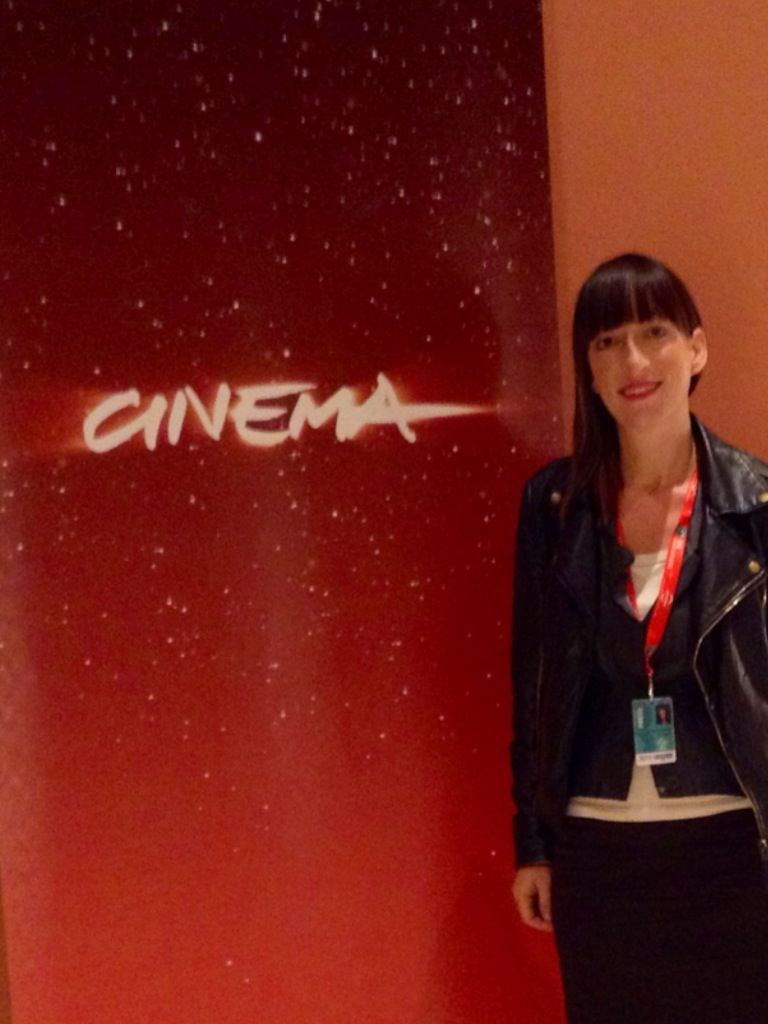
photo (24).

The Official Awards of the 8th Rome Film Festival

The International Jury, chaired by James Gray and composed of Verónica Chen, Luca Guadagnino, Aleksei Guskov, Noémie Lvovsky, Amir Naderi, and Zhang Yuan, assigned the following awards to the films in competition:

Golden Marc’Aurelio Award for Best Film: Tir by Alberto Fasulo

Best Director Award: Kiyoshi Kurosawa for Sebunsu kodo (Seventh Code)

Special Jury Prize: Quod Erat Demonstrandum by Andrei Gruzsniczk

Best Actor Award: Matthew McConaughey for Dallas Buyers Club

Best Actress Award: Scarlett Johansson for Her

Award for Emerging Actor or Actress: the entire cast of Gass (Acrid)

Award for Best Technical Contribution: Koichi Takahashi for Sebunsu kodo (Seventh Code)

Award for Best Screenplay: Tayfun Pirselimoğlu for Ben o değilim (I Am Not Him)

Special Mention: Cui Jian for Lanse gutou (Blue Sky Bones)

CINEMAXXI

The CinemaXXI International Jury chaired by Larry Clark and composed of Ashim Ahluwalia, Yuri Ancarani, Laila Pakalnina, and Michael Wahrmann, assigned the following awards to the films in the CinemaXXI competition:

CinemaXXI Award for Best Film (reserved for feature-length films)Nepal Forever by Aliona Polunina

CinemaXXI Special Jury Prize (reserved for feature-length films): Birmingemskij ornament 2 (Birmingham Ornament 2) by Andrey Silvestrov and Yury Leiderman

CinemaXXI Award for Short FilmsDer Unfertige (The Incomplete) by Jan Soldat

Special Mention CinemaXXI Short FilmsThe Buried Alive Videos by Roee Rosen

PROSPETTIVE DOC ITALIA

The jury headed by Marco Visalberghi and composed of Christian Carmosino, Gerardo Panichi, Giusi Santoro, and Sabrina Varani, assigned the following awards:

Premio Doc It – Prospettive Italia Doc for the Best Italian Documentary: Dal profondo by Valentina Pedicini

Special Mention: Fuoristrada by Elisa Amoruso

AWARD FOR BEST FIRST/SECOND FILM

The jury headed by Roberto Faenza and composed of Fausto Brizzi, Carlo Freccero, Alessandra Mammì, Valerio Mieli, Camilla Nesbitt, and Andrea Occhipinti assigned the following awards:

Taodue Golden Camera Award for Best First/Second Film: Out of the Furnace by Scott Cooper

Taodue Award for the Best Emerging Producer: Jean Denis Le Dinahet and Sébastien Msika for Il sud è niente

BNL AUDIENCE AWARD FOR BEST FILM

Relying on an electronic system, the Festival enabled the participation of the audience in choosing the winner of the BNL Audience Award for Best Film. The films competing for this award were those in Competition. The audience awarded the:

BNL Audience Award for Best Film: Dallas Buyers Club by Jean-Marc Vallée

Posted in ITALY, ROME | Leave a comment

Sir John Hurt Interview

image
Links and Instincts

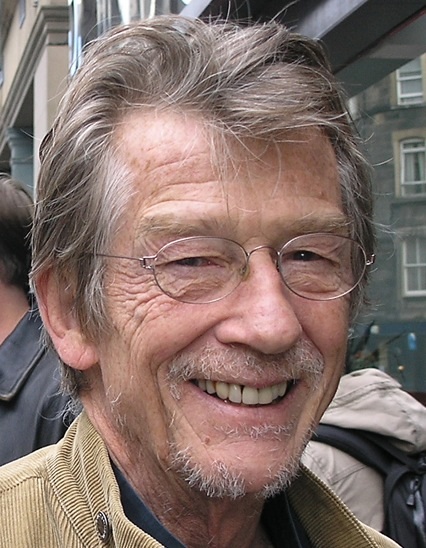
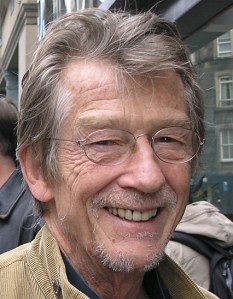
Oscar winning actor Sir John Hurt shared his opinions on film, inspiration, and links, at the special ‘Movie Talk’ event at this years Rome Film Festival. Hurt is one of the greatest screen legends to steal the show. I feel privileged to have attended.

Both big screen and treading the boards, his extraordinary career has seen him work alongside Laurence Olivier, Orson Welles, and Richard Burton. A humble one pound a week funding saw him through rough times as he was mastering his craft at RADA. From starvation to stardom, Hurt managed to achieve an Oscar for ‘Best Supporting Actor’ for his role in Midnight Express, and numerous other BAFTA awards, including an outstanding British Contribution to Cinema Award at the 2012 BAFTA’s in recognition of his incredible range of roles in a career spanning six decades.

Here’s what he had to say, with questions fired from all directions, an eager audience, and a staged open forum, up for discussion and random debate.

On the subject of working relationships. Who do you choose to work with and what makes you choose a role?

I go with my gut instinct. I would not question Lars von Trier if he asked me to work with him, I would say yes immediately. The more experience one has as an actor the more difficult it becomes to make choices. One can only rely on instinct, yet it changes as one gets older. The choices become harder as one gets older. Take someone like Beethoven. His early music being more spontaneous. Whereas his later works were more thought about, wise, and lulled over. Not that I am by any stretch likening myself to Beethoven. And on occasion, the bank balance makes choices for you.

Are you a fan of Independent films?

I love independent films, interesting scripts and directors. The Field and The Hit are films I am passionately fond of. Thats what is great about my latest film, Snow piercer. It is esoteric but it also has the commercial possibilities and blockbuster-mania of a wider audience at the same time. The director, Bong Joon-ho, summoned me to a Soho hotel and insisted I was right for the role. He’s fantastic. He shoots what he wants to see precisely on screen. He’s almost a Hitchcock’s Hitchcock.

Inspiration

What inspired you to become an actor?

It was seeing Alec Guinness as Fagin in Oliver Twist that ignited my infatuation for acting. I saw every single gesture and move of Guinness as perfection, it was enormously influential. Shortly after, aged nine, I played a girl in a school play of Bluebird and had the extraordinary feeling that I was in the right place. That feeling never left me.

My parents did not want me to become an actor. After the war, the most important things were respectability and security, none of which one associates with acting. My parents sent me to art school because they thought I could become an art teacher. It was not until my clergyman father went into the mission field, that I realised this was my chance to get into acting.

He laughs about how, humorously, it was a rather unsavory fast food joint that he recalls, led him to his fate.

“It was at Wimpy, the English postwar edition of a hamburger, a kind of cardboard, where my arty friends from Australia, and I, had a meeting. They suggested I should be an actor, so they got me the RADA forms and filled them out for me. I was terrified at the audition with six beady eyes staring at me. They allowed me into RADA on the condition I got a scholarship, which I did, at one pound a week. I loved my time in London and at RADA, I used to go to the cinema often and was a huge fan of foreign films.”

Were you a RADA student in London during the Swinging Sixties?

“The swinging 60s didn’t happen in London until the Italians came to London and fun came to soho with Tramps, the club.”

On screen

Talking of talent, Hurt celebrates the fact that today the big screen has a vast array of talented stars who have stepped up to the mark, for their close up, stating:

“Screen acting has improved greatly. Stage acting has always been great but screen acting has improved over the years. There has been a significant change in British screen actors as they used to be just money making projects to pay for the stage projects. Actors take the movie projects more seriously now, including Tilda Swinton, whom I play alongside in Snow piercer.”

On set

“If I see an actor trembling on set, I help him. The world is a small place, you are a link, one must respect the young actors. They are links and we need to support those links. People are often taken advantage of on set. They say you don’t know you have made a film until you have played the lead.”

On Oscars

Hurt was famously nominated for a Best Actor Oscar for his role as Joseph Merrick in Elephant Man, but the award went to Christopher Walken for Deer Hunter.

He reflects:

“I think it was because nobody recognised my face or saw my face in the role of Joseph Merrick, as I had so much make up to transform my face. No American actor would ever obliterate their own face for a role, but British actors understand that is part of what is required. I’m not a method actor. I don’t have a method. I get into character only by considering the role as the ‘truth’.”

On stage

Do you think theatre will die out?

“In these uncertain times, we don’t know what the future holds for the film industry. But nothing will ever beat what is live and actually ‘there’. It is human. All the other media will go through massive changes, but theatre will never die. Theatre will never die.”

Just as he said that, an Italian man hysterically shouted over to him asking him to read his script.

To which, Hurt graciously responds “How could I refuse.”
Clearly someone else went with their instinct, and you never know, he could be a future ‘link’.

Hurt leaves a final thought:
“My plea on my gravestone will be to remember the artistry of film.To put the horse in front of a cart. Not to think of the money side of making films.”

I think his epitaph should say, from link to legend.

Look out for Snow Piercer, in cinemas soon.  

See article at http://johnhurt.co.uk/post/67315075106/john-hurt-at-the-rome-film-festival

Image courtesy of Ivon Bartholomew
Posted in INTERVIEWS, ITALY, ROME | Leave a comment

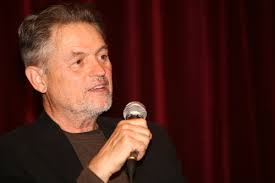
Nicola talks to Jonathan Demme at Rome’s Film Festival

photo (68)

Music, melodrama and morals with Jonathan Demme

What has been your most difficult film to make?

photo (66)

“Fear of Falling’, my latest film, has been my most challenging film. It was years in the making, it was a play. Henrik Ibsen’s The Master Builder, which has been made for TV many times.”

In Demme’s interpretation of the play, he changed one detail, a twist, the master builder is on his death bed. The movies talks about a woman who has a fixation with the master builder, who visits him whilst he is  on his death bed. Which changes it dramatically.

“Its the boldest film I’ve made. It knows it’s a play, but it is celebrated in the form of a movie.”

He has made a ‘scary house’ movie out of this melodrama.” The classic long corridor shot, being the most scary shot in cinematic history.

“There is a place for Henrik Ibsen in 21st Century cinema. A mix of dramaturgy and different media. Its a different kind of visual feast, if you surrender to it.”

What are you wanting to do, genre wise, for your next movie?

“I have not turned my back on anything, genre wise. I was asked in 2005 to make an 85 million dollar movie. I’m still waiting for calls like that. I don’t want that type of responsibility. Is it really ok to be spending that amount of money in this day in age? Budgets of that kind of multitude. If a movie is great. Size doesn’t matter. I am never called to do Hollywood Blockbusters.”

“Im addicted to making documentaries. I like to shoot fast. I like to shoot seven or eight pages a day. I like to do TV. There is wonderful writing going on in American TV today.”

Demme’s dimension of writing

“I love all aspects of film making. Everybody’s a story teller, from the writers, from Meryl to Denzel, the cameraman, the sound man, the lighting man. Story, story, story.”

Demme was a story teller and writer from day one. Being in the right place at the right time, as a publicity writer for United Artists in NY meant that Demme was sat across the table at a fated meeting between himself and his hero Roger Corman. Corman said “you write good publicity, do you think you could write a script.”

Demme delivered a script to Corman at the Hilton Hotel in London, and the rest is history.

Demme has never looked back.

Music 

Music is such a major ingredient in the artistry of movie making and Demme is the master of marrying cinema and music. He has made a business out of making movies about music.

“Music makes the story. Cinema brings an added dimension to music that is already beautiful to our ears, and make it exquisite.”

Demme wanted to work with music again, after working on his remarkable trilogy of concert films with Neil Young. Demme was so in awe of the lighting at a Talking Heads gig, he knew instantly it had to be a movie, so he worked with David Burns on a documentary. “Neil Young is tremendously cinematic in his vision. He loves the camera. It’s like the audience could not see what was in Burns head, because on stage live music the lighting is too muted, but I could.”

Who is Demme’s favorite composer? Enzo Avitabile, with whom he made his latest music documentary from Jonathan Demme, ‘Enzo Avitabile Music Life’.

Music Life delves into the world of musical instruments and the people playing them. Different people playing different instruments at the same time, which became a bonus theme of the  documentary, which was really meant to be a work about the people of Naples, but became so much more. You can’t have Naples without music. It won’t work.

“Enzo Avitabile is interested in musicians in woods outside of Palermo. The mix, the magic, a cross contamination, if you will.”

On that note:

If you could make a film about any historical Italian figure, who would it be?

Vittorio Arogoni, an Italian writer and peace activist who was murdered in 2008″

Arogoni (4 February 1975 – 15 April 2011) was an Italian reporter, writer, pacifist and activist who was credited as one of the many activists who revived the pro-Palestinian International Solidarity Movement (ISM) in the Gaza Strip, from 2008 until his death. Arrigoni maintained a website, Guerrilla Radio, and published a book of his experiences in Gaza during the 2008–09 Gaza War between Hamas and Israel. He was murdered by suspected members of Tawhid wal-Jihad, a Palestinian Salafist group in Gaza.

Demme cares about messages in film. A movie that he wants to make with a positive muslim theme is currently awaiting funding.

Demme, a man of morals, wants:

“Musicians play music together, so in the world we should all compose all sorts of things together in a positive way.”

Fear of Falling premiers at the Rome Film Festival this evening.

Posted in DESIGN, INTERVIEWS, ITALY, ITALY MAGAZINE, ROME | Leave a comment

Day Four @ Rome Film Festival

Day Four @ Rome Film Festival

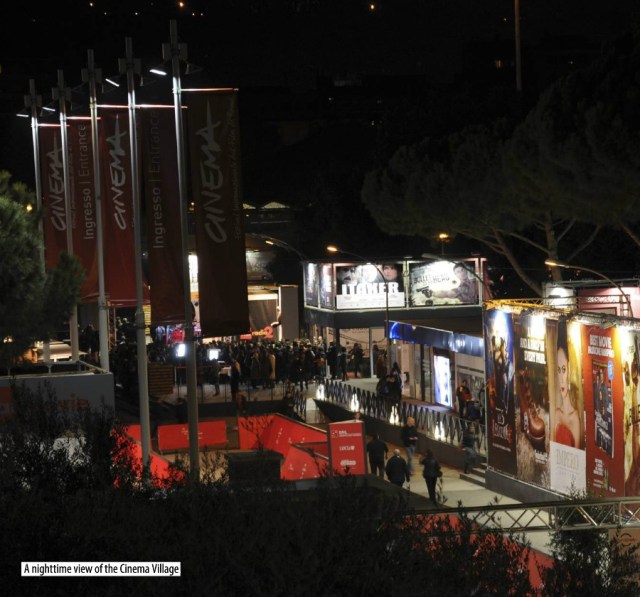
Methinks there might be too much caffeine in Rome, and that’s probably for the best, when you’ve got such an exciting line of dazzling names about to strut the red carpet over the next few days, here at Rome’s Auditorium Parco Della Music, in honor of the 8th edition of Rome’s Film Festival, from the 8th-17th November.

Tonight, Jonathan Demme’s ‘Fear of Falling’ premiers. Demme takes on Ibsen’s ‘The Magic Builder’, this time with a twist.

Posted in ITALY, ROME | Leave a comment

Beautiful ties in Rome, via della Scrofa

Beautiful ties in Rome, via della Scrofa

Posted in DESIGN, FASHION, ITALY, ROME | Leave a comment

Rome Film Festival

Rome Film Festival

If I were to combine Greek Gods, schizophrenia and La Dolce Vita’s Via Veneto, you would think I was mad. Meh, in Rome, it’s all in a days work when the 8th edition of Rome’s Film Festival (8th-17th November) is approaching. Marco Mueller, art director of Rome’s Film Festival, explained that the eighth edition will be “contradictory, schizophrenic.” He said, “the first seven days of the festival in the Eternal City will feature a nightly screening of a U.S. film with ‘an important star’ on the red carpet.” Nothing less than the top: Scarlet Johansson, Christopher Walken, Sharon Stone and Christian Bale, to name but a few.

See more at: http://www.italymagazine.com/news/modern-day-greek-gods-behaving-badly-rome-film-festival#sthash.o2vCmfs0.dpuf

Posted in ITALY, ITALY MAGAZINE, ROME | Leave a comment

I Heart My City for National Geographic

Image

Rome is My City- National Geographic
In the city of Seven Hills, here are a few of this art history aficionado’s favorite things about the place she’s proud to call home

Autumn is the best time to visit my city because there is better weather, fewer crowds, better food festivals..

To read full article, click the link in side bar.
Posted in INTERVIEWS, ITALY, ROME | 1 Comment